Source record
- Jurisdiction
- European Union
- Issuing authority
- European Parliament and Council of the European Union
- Document status
- Council approved; Official Journal publication not yet verified
- Council approval
- Source checked
Original documents
A substitute can make a face cream feel just like the original on the day it is mixed. Weeks later, the cream might thicken or begin to separate. A change that looks small on the ingredient list can send a formulation team back to the bench while the factory and retailers still have stock of the old version.
That is the practical question behind Omnibus VI, which the Council of the European Union approved on 19 November 2026. The transition periods discussed here apply to certain substances classified as carcinogenic, mutagenic or toxic to reproduction (CMR) when they are added to the prohibited list in Annex II of the EU Cosmetics Regulation. They do not apply to every ingredient ban.
What changes at the bench
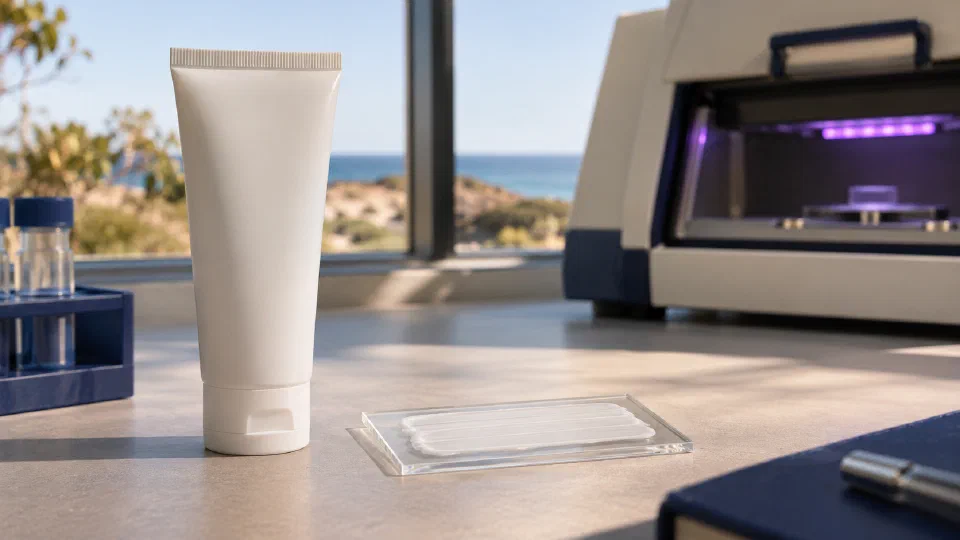
Imagine that the ingredient in this cream gave it its characteristic slip. The team would check how a substitute affects the cream’s feel, whether the emulsion holds together over time and whether the formula remains compatible with its jar. If the change could affect preservation, the team would revisit the evidence that the cream stays protected during use. A promising lab sample still has to hold up in the intended pack and under the conditions used to make the product at scale.
The finished formula then needs to be reflected in the safety documentation and on the label. The manufacturer and distributors also need to know which batches contain the old formula and which units have already been supplied on the EU market. Making or packing a batch does not by itself establish that it has been placed on the market.
When the two deadlines start
The amended Article 15(6) distinguishes first supply on the EU market from continued sale or other supply of units already placed on it. The periods depend on what happened to the request for an exception from the ban.
| What happened to the request for an exception | First supply on the EU market | Continued sale or supply |
|---|---|---|
| No qualifying request was submitted (CMR category 1A, 1B or 2) | 6 months | 12 months |
| A qualifying request was refused because the EU’s Scientific Committee on Consumer Safety raised safety concerns (category 1A, 1B or 2) | 3 months | 9 months |
| A qualifying request was refused because a suitable alternative was available (category 1A or 1B only) | 24 months | 36 months |
The last route requires an updated cosmetic product safety report. Both periods run from the date the ingredient-specific amendment to Annex II enters into force. The Council vote does not start either clock, and neither does the date Omnibus VI itself enters into force.
Under Article 6, Omnibus VI enters into force 20 days after publication in the Official Journal of the European Union. The Council expects publication by the end of 2026; publication had not been verified as of 25 November.
Related reading: Launching a cosmetic product in the European Union. The face cream is hypothetical; check the relevant ingredient measure for the dates that apply to a real product.
Cover photograph: Cup of Couple / Pexels under the Pexels license; cropped for this article. The photo does not depict the hypothetical formula discussed above.
This article has not been independently reviewed by a regulatory professional.