A “cleaned” label tells the next analyst very little if the log contains only a tick and initials. They still need to establish which item was cleaned, what procedure was used, and whether a problem remains before reuse.
The cleaning method and checks must suit the equipment and intended work. The log records their execution; it does not establish by itself that the method is effective.
Put the cleaning details beside the item
A practical form can include:
- The equipment or area identifier and location.
- The reason for cleaning, including relevant previous use.
- The procedure and revision, with materials and parameters required by that procedure.
- Who performed the work and when it happened.
- Observations, required checks, and their results.
- Any exception, follow-up, review, or restriction on use.
Adapt these suggested fields to the laboratory’s work and applicable procedures. GB guidance identifies cleaning, maintenance, and current documentation as parts of cosmetic GMP. ISO 22716 covers production, control, storage, and shipment; its published scope excludes R&D. An R&D lab’s arrangements therefore need to reflect its own work and obligations.
Record residue and the follow-up
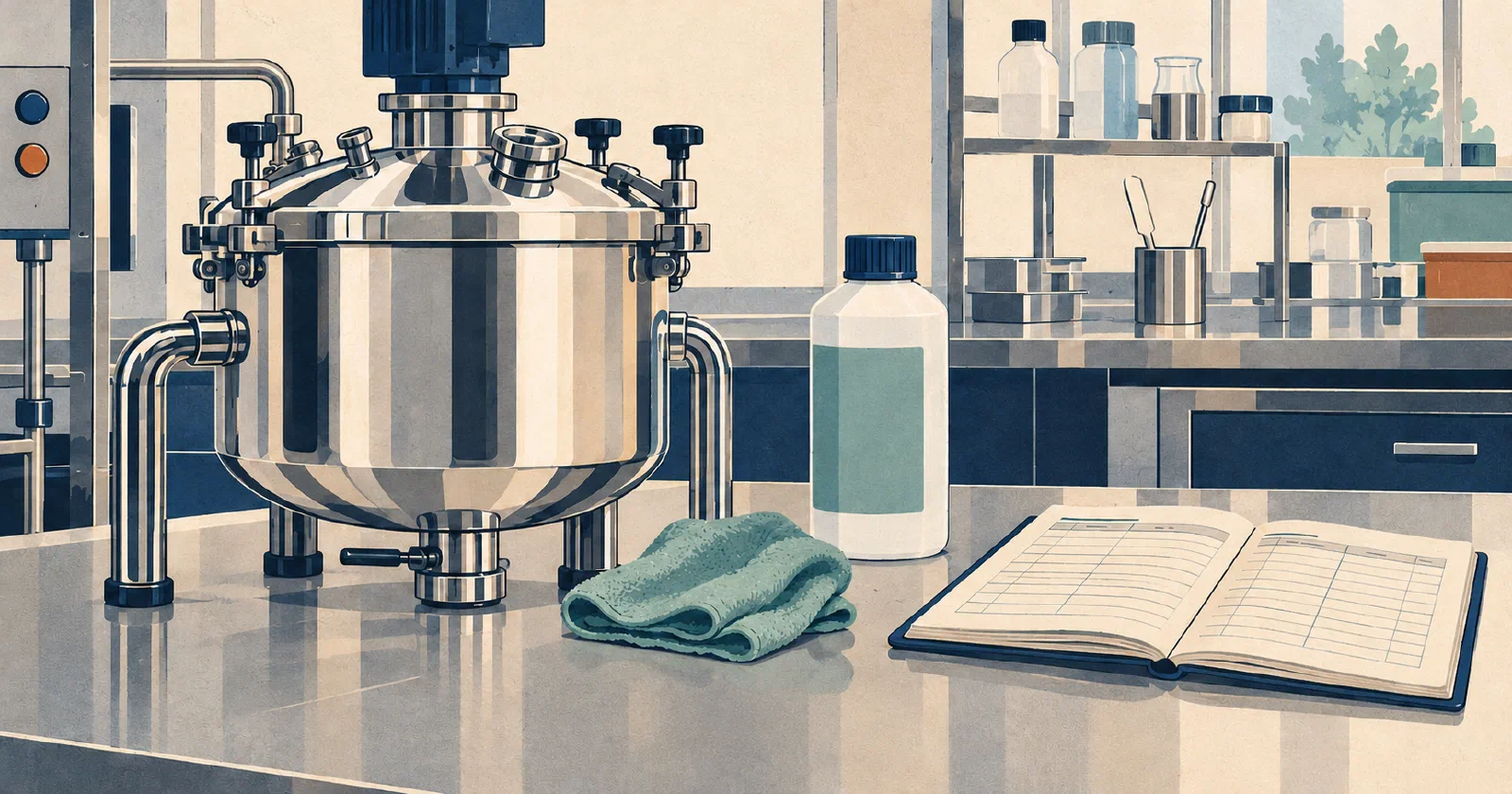
In a fictional example, an analyst cleaning vessel V-014 finds residue around a removable fitting. Record where the residue was found and keep the vessel unavailable pending the action required by the local procedure.
The follow-up should identify the additional work, performer, time, and required check. If a separate review is needed before reuse, record its outcome. A second “cleaned” tick would hide both the initial finding and the reason further work occurred.
Keep cleaning and separate sanitisation or disinfection activities distinguishable. A shared “done” box may leave the next person unable to tell which steps were performed.
Record when cleaning happened
If cleaning ended at 15:00 and the entry was saved at 15:25, the digital timestamp describes the second event. Capture the activity time separately when the difference matters. Identify a late entry under the laboratory’s procedure; do not invent a precise time or silently substitute the save time.
For corrections and review history, use the same conventions as other laboratory records.
Protect equipment after cleaning
FDA’s self-inspection checklist addresses protection of cleaned equipment against subsequent contamination. Define how the item is stored and what happens if that protection is disturbed before use.
If residue raises a question about earlier work, use the equipment history to identify potentially affected samples and assess the implications. Link that assessment to the cleaning record.
Sources: GB cosmetics guidance; ISO 22716 public scope; FDA cosmetic self-inspection checklist.