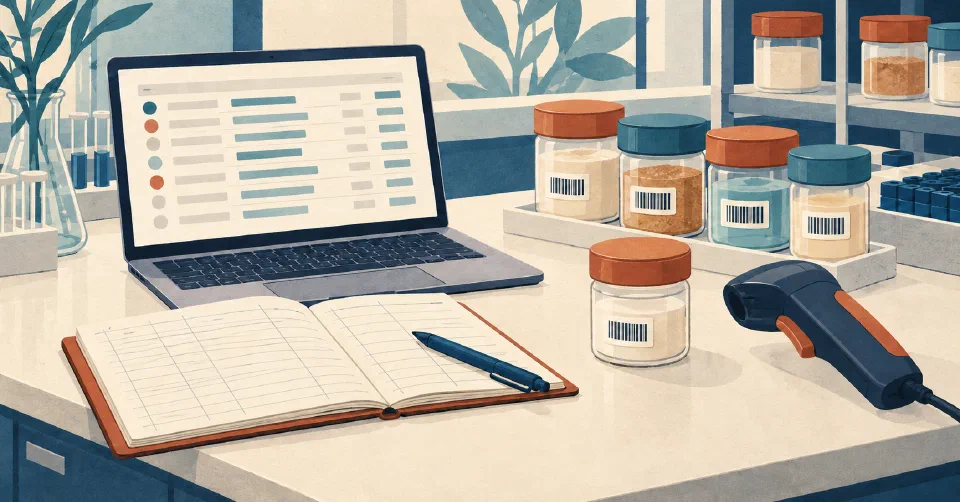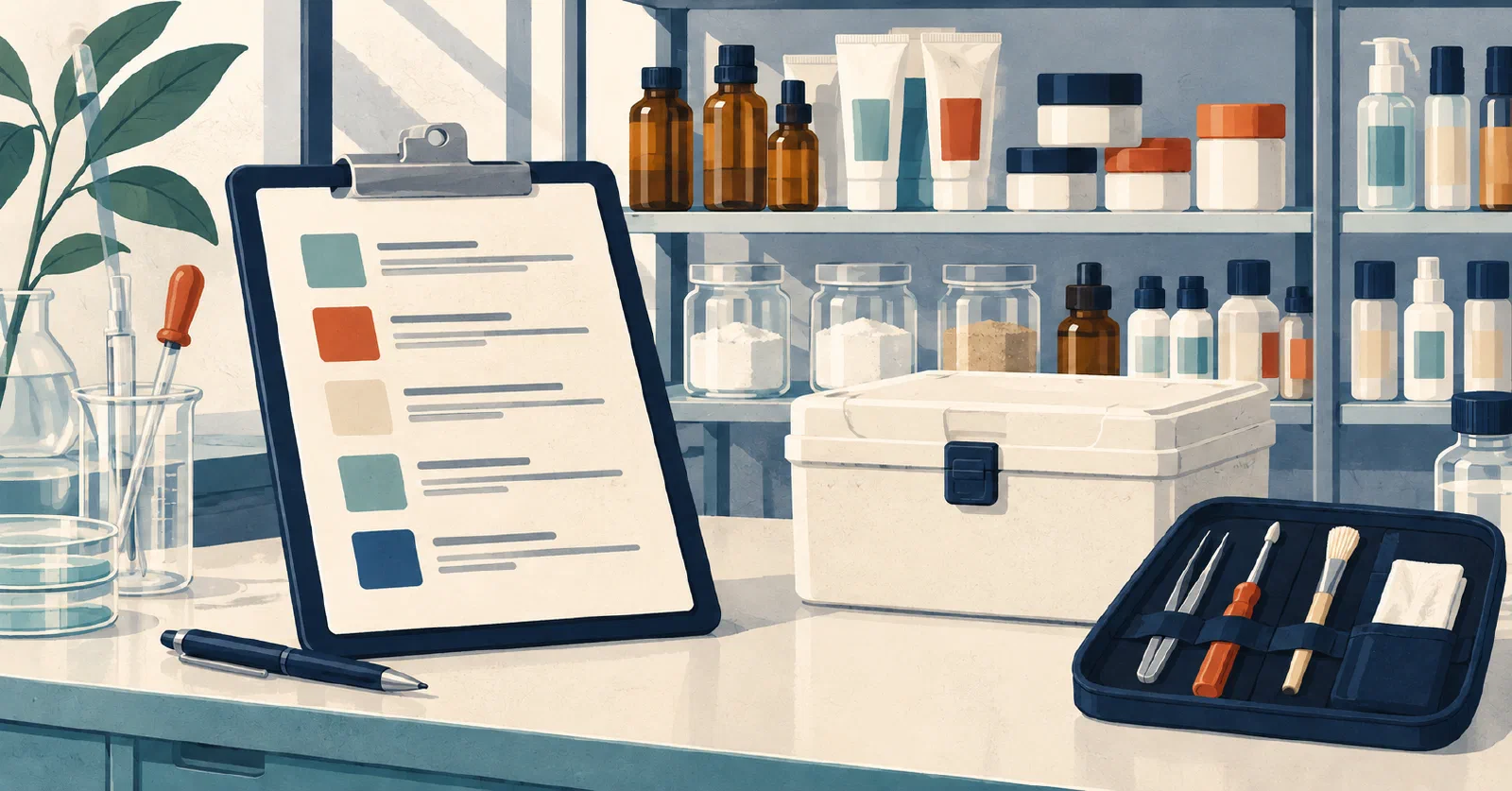
A bottle with uncertain status appears on Monday’s inspection checklist. On Friday, someone marks the finding “done”, but the bottle is still on the same shelf. The checklist now records activity without showing what was resolved.
For each finding, record the condition observed, the person responsible for the response, and how its completion will be checked.
Say what you found and where
“Storage needs attention” could mean almost anything. This fictional entry is more specific:
At 09:10, bottle RM-214 was found in cabinet C-03, designated for approved laboratory materials. Its acceptance status could not be established from the label or receipt record.
Add the inspector, date, relevant procedure, and supporting evidence. A photograph may help, but the observation should remain understandable without it. Avoid guessing the cause before the investigation.
For manufacturing and QC laboratories, FDA’s self-inspection checklist includes equipment condition, material identity and status, laboratory controls, and records. Use the site’s activities and procedures to define its own inspection scope. Occupational safety and environmental inspections need their own appropriate expertise and scope.
Separate immediate control from corrective work
Assess the significance of the finding and take any immediate action justified under the procedure. For RM-214, the laboratory might place the bottle on hold while establishing its status. Record that action separately from the investigation of how it reached the cabinet.
Assign a person, expected outcome, and due date. “Laboratory team” leaves ownership unclear. If a due date changes, retain the earlier date and the reason for moving it.
Review the action before closing the finding
Suppose the investigation finds that acceptance testing is incomplete. Replacing the label with “approved” would not resolve that fact. The team corrects the storage location and identification, then assigns the outstanding testing.
The reviewer can close the inspection finding while keeping the separate acceptance task open, if the site’s procedure permits it. The closure entry should explain what changed, point to the evidence, and state that any restriction remains. It should not leave the next person to infer that the material is approved from a photograph or a ticked box.
Look for the findings that return
Repeated unclear labels may point to a template, handover, or approval step that needs attention. Compare recurrence by location and type of finding, then check whether the corrective work addressed the underlying problem.
GB cosmetics guidance includes internal audits and current documentation in its GMP explanation. Bring recurring inspection findings and their follow-up records into that wider review.
Sources: FDA cosmetic self-inspection checklist; GB cosmetics guidance.