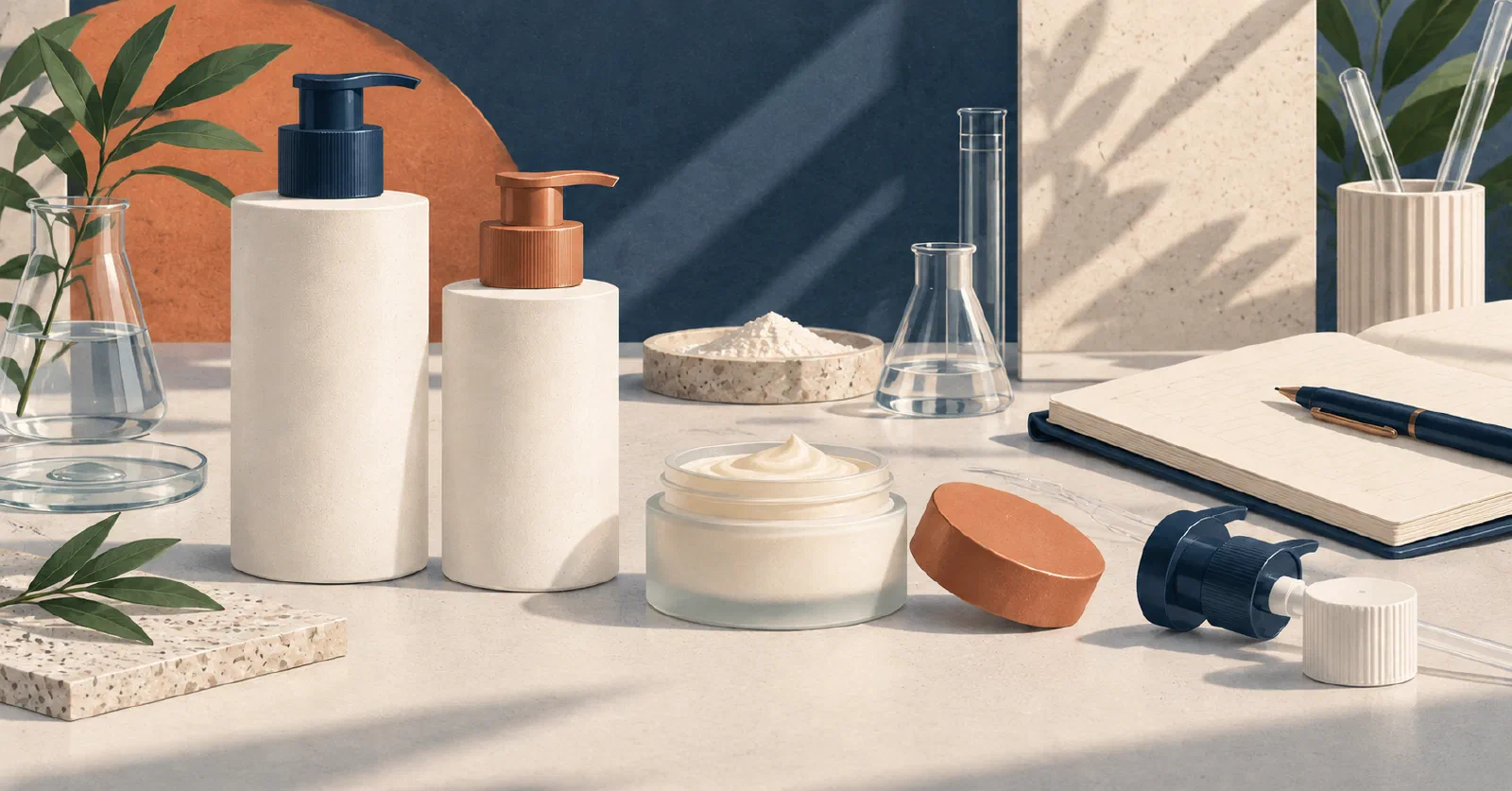
A lotion may remain unchanged in storage while its pump leaks, clogs, or delivers an inconsistent dose. A packaging compatibility study looks at the proposed formula and pack together, including how both behave during storage and use.
European Commission safety-assessment guidance recognises interactions with packaging. Define the combination being evaluated and the questions the study must answer; the right study will depend on the product and pack.
Identify all the parts that matter
Record the formula version, fill, size, and relevant package components, including closure, liner, seals, pump parts, and coatings. Obtain supplier information needed to assess material composition and potential transfer into the formula.
Ask for the material specification as well as any recycling description. Similar-looking packs can use different materials. A food-contact declaration may contribute information, but its scope and conditions still need assessment for the cosmetic in question.
Turn the product brief into study questions
For a lotion in a pump, investigate priming, dose consistency, and operation as the container empties. Other products may raise leakage, cracking, corrosion, volatile loss, or analytical questions.
Choose physical inspections, functional measurements, analytical work, and specialist assessment accordingly. Define acceptance criteria before reviewing the results: “pump acceptable” needs a meaning evaluators can apply consistently.
Compare representative samples
Use representative formula in the intended packaging. A suitable reference container can help separate a formula change from a packaging-related change; ANVISA’s guide discusses this parallel approach and the reference material’s compatibility.
Identify differences between trial components and the commercial specification. Plan enough units for tests that consume, open, or disturb them. One sample repeatedly handled for every assessment may acquire a different history from an unopened storage unit.
Choose conditions for the product and pack
Consider expected storage, transport, display, and use. Elevated or low temperatures, cycling, light, and transport stresses may be relevant, but their selection needs a reason. Cosmetics Europe’s guidance takes a product-dependent approach.
Set a baseline and justified checkpoints. Accelerated observations can reveal weaknesses; they do not provide a universal conversion from weeks of testing to years of shelf life. Continue the follow-up needed to support the proposed period.
Measure the selected formula properties alongside package condition and function. Photographs can show a visible change but cannot replace a dose measurement or assay. If tracking mass loss, distinguish storage loss from deliberate dispensing.
Include opening and dispensing
An unopened sample does not represent every aspect of repeated handling. Plan relevant opening, closing, and actuation work. Research comparing packaging’s microbial protective performance illustrates why the actual device needs assessment; its particular experimental method is not a universal requirement.
Identify the tested formula and package components in the final report. Include trends, deviations, and any unresolved work. A later change to the pump, seal, fragrance, or supplier specification needs comparison with that tested combination.
Sources
- European Commission: Guidelines on Annex I to the Cosmetics Regulation.
- Cosmetics Europe and packaging industry associations: Information exchange on cosmetic packaging materials.
- ANVISA: Cosmetic Products Stability Guide, 2005.
- Cosmetics Europe and CTFA: Guidelines on Stability Testing of Cosmetics.
- Catovic and colleagues: Evaluating the protective efficiency of cosmetic packaging against microbial contamination.