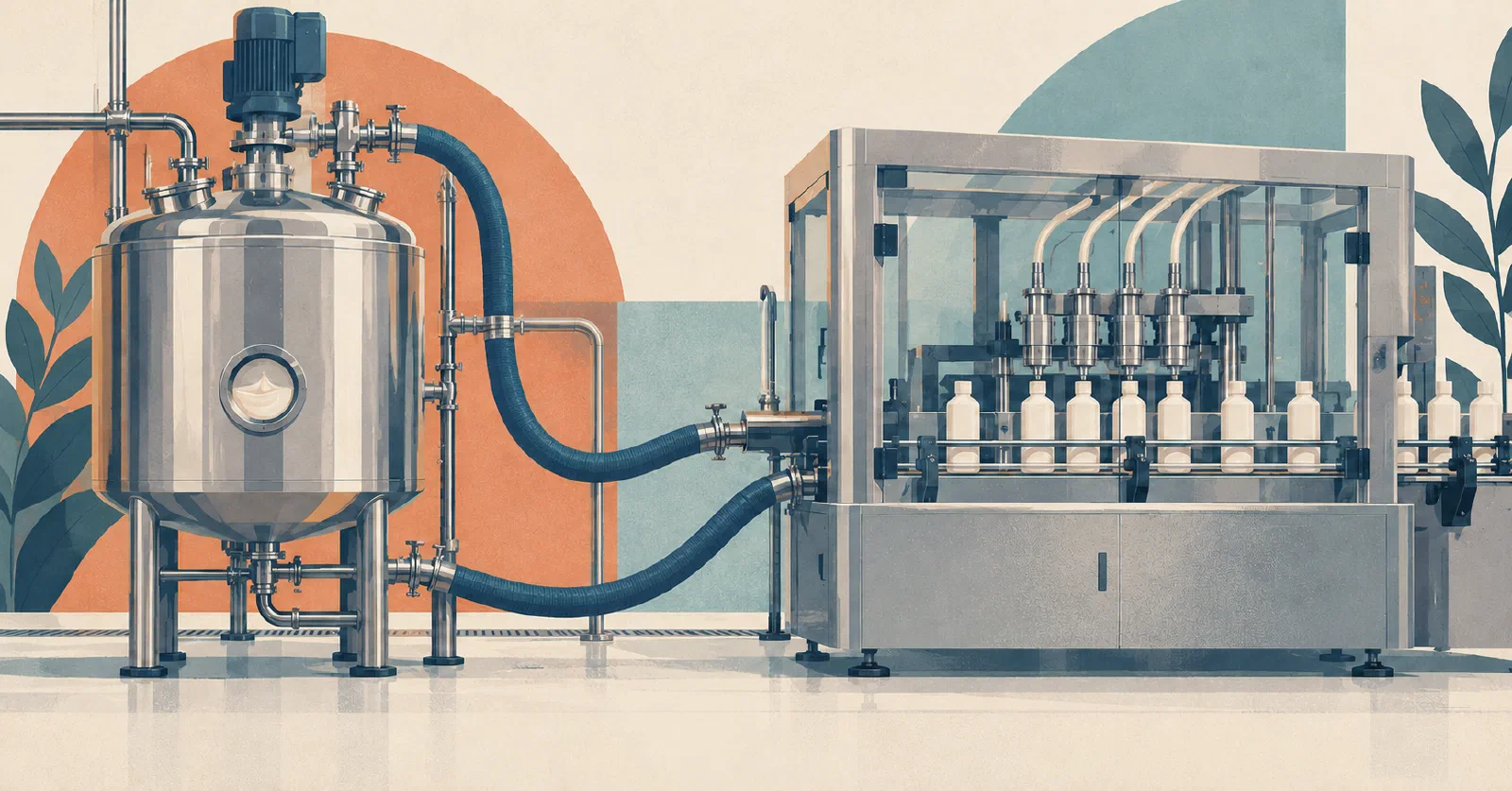
Between mixing and its final pack, a batch may wait in a vessel or pass through hoses and pumps. Filling introduces further contact surfaces. Each stage belongs in a contamination-control review.
FDA identifies raw materials, water, manufacturing conditions, preservation, and packaging among possible routes of microbial problems. Following the product through the factory helps locate where a control or investigation needs to focus.
Map the equipment in contact with the batch
Draw the vessels, intermediate containers, hoses, pumps, filters, and filling components that contact the product. Include manual sampling and transfer, and mark where the batch is open to the room.
Walk the line against that drawing. A procedure may describe an uninterrupted run while the real process includes a shift change, late ingredient, or temporary hold. Add those events to the review.
FDA’s cosmetic inspection checklist covers processing, holding, transfer, and filling equipment alongside written instructions and sampling. Use it as a reference while assessing the site’s own products and requirements.
Follow the water to where it enters the batch
The checklist calls for defined chemical and microbiological specifications and regular testing of ingredient water. Identify supply, storage, transfer, and sampling locations. A satisfactory upstream sample describes that point; establish its relevance to the water actually added downstream.
Agree who reviews trends and what happens after an unexpected result. Justify the sampling frequency and response for that water system.
Protect the cleaned parts
FDA also addresses storage and covering of cleaned utensils and contact surfaces. Review the main vessel and the smaller items introduced later: seals, nozzles, connectors, and sampling tools.
Make their use status identifiable. Define what happens if a cover is disturbed or equipment waits beyond the site’s justified interval. The cleaning-log guide covers recording that work.
Plan for a pause before one occurs
For bulk holding, define the container, handling, temperature conditions, and permitted duration. Justify those conditions for the formula and manufacturing process.
For line interruptions, specify who decides on restart, which checks follow maintenance, and how open components and partially used materials are protected. Capture the actual hold or interruption in the batch history.
Select sampling locations and suitable methods
A bulk sample and a finished-pack sample concern different points in the process. Select locations and frequency through a justified sampling plan. Discuss method suitability with the laboratory: FDA’s cosmetic methods address preparation and media intended to reduce preservative interference.
Routine microbiology and preservation efficacy assessment are also different questions. ISO 11930 addresses antimicrobial protection within its scope; that assessment alone does not establish control of every production run.
When a result is unexpected, compare its location and time with water findings, equipment history, and batch events. Preserve the original result while investigating. If further sampling is justified, record what it is intended to establish and assess its findings alongside the original result.