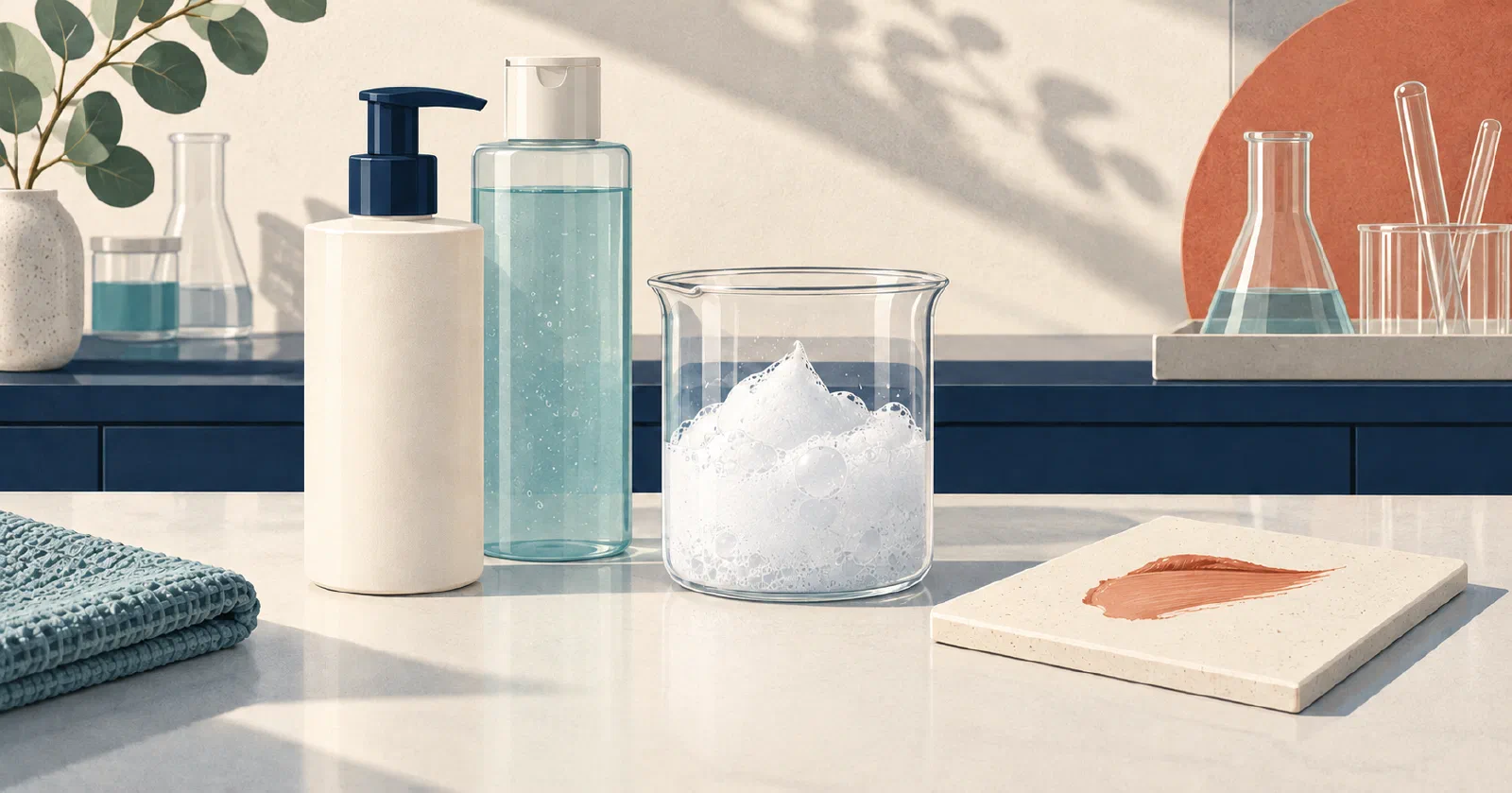
A rich lather can make a cleanser pleasant to use, but a photograph of the foam cannot show how well it removes makeup. Each question needs its own comparison.
A foam test can measure lather volume or persistence; a cleansing test measures removal of the chosen makeup or soil. The product brief might also call for foam that forms quickly or lasts through application, so choose the measurements and conditions to match the question.
Bubbles and micelles are different structures
Foam contains gas bubbles dispersed through another material. A foam-height measurement describes that structure under the chosen procedure; it does not directly measure soil removal.
Surfactants can also form aggregates called micelles in solution. Micellar solubilisation involves another component becoming incorporated into or onto those aggregates. Micelles are not the visible bubbles in the lather. IUPAC’s terminology separates these structures and processes.
During washing, surfactants act at interfaces and can help oily material enter a form that can be carried away. To assess cleaning, follow what happens to the relevant soil on the relevant surface. To assess foam, measure the formation and behaviour of the bubbles.
Make the comparison repeatable
A photograph of two foams is hard to interpret unless dose, water, agitation, and observation time are controlled. Define dilution, temperature, water conditions, and the way air enters the sample. Decide whether initial volume, persistence, or another property answers the brief.
Research on model surfactants linked foam formation with dynamic surface tension and used different characterisation methods. It illustrates why the procedure belongs beside the result.
For cleansing, choose a relevant makeup or soil and method separately. Compare complete formulas at the intended conditions of use, with active surfactant content recorded.
Compare complete surfactant blends
A 2024 study of Laureth-23 combinations used skin-compatibility assessments and a separate cleansing procedure with model dirt. Changing the accompanying surfactants changed the balance between cleaning and irritation outcomes. Keep the tested blends and methods attached to those findings when comparing them with a proposed cleanser.
The authors also identified further surface and foam measurements as needed to understand the mixtures. A cleansing result cannot supply those missing measurements.
Assess skin tolerance separately
A small randomised study in women with sensitive skin compared a foaming cleanser containing hydrophobically modified polymers with a nonfoaming cleanser. Both were generally well accepted, without significant differences in the reported clinical comparisons. The work involved particular products and was connected to the test product manufacturer.
The comparison concerns those two cleansers. For a new formula, select a tolerance assessment suited to its intended users, alongside the cleaning, foam, and sensory tests.
Sources
- IUPAC Gold Book: Foam.
- IUPAC: Surface active agents, micelles and solubilisation.
- Buzzacchi, Schmiedel and von Rybinski: Dynamic surface tension and foam formation.
- Dick and colleagues: Evaluation of Laureth-23 as a primary surfactant.
- Draelos and colleagues: Hydrophobically modified polymers and cleanser irritation potential.